
What is AI? Learn what Artificial Intelligence is, how it works, its types, benefits, real-life examples, and future in this easy beginner guide.
Introduction: What is AI?
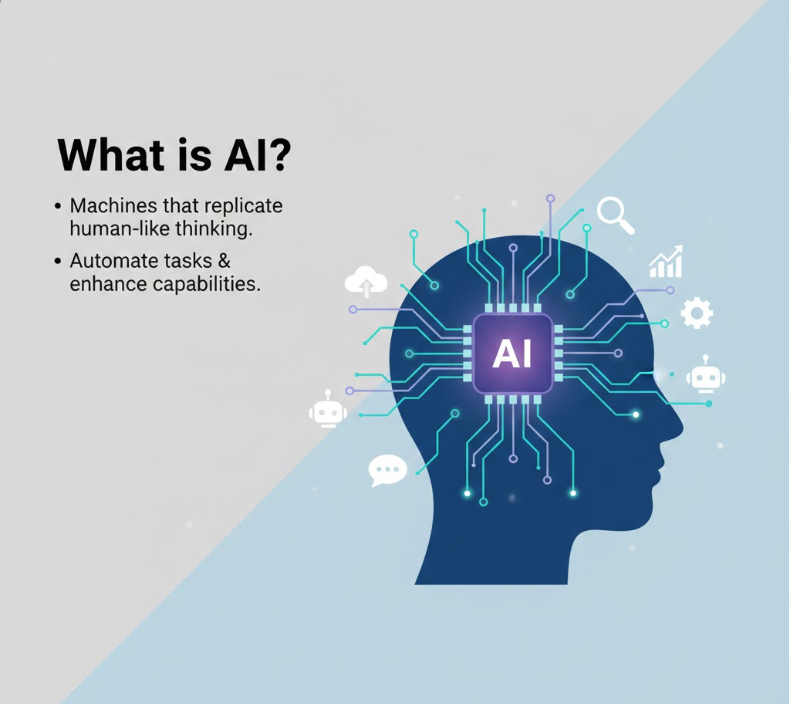
What is AI? Artificial Intelligence (AI) is a technology that allows machines and computers to think, learn, and make decisions like humans. Today, AI is becoming a part of our daily life. From mobile phones and voice assistants to online shopping and navigation, AI is everywhere.
Understanding what is AI is important because it is changing how we live and work. In this guide, you will learn everything about AI in simple and easy English.
Table of Contents
- What is AI in Simple Words?
- History of AI
- How Does AI Work?
- Types of AI Explained
- Key Technologies in AI
- What is AI in Daily Life?
- Benefits of AI
- Challenges of AI
- Future of AI
- Real-World Applications of AI
- How to Start Learning AI
- Conclusion
What is AI in Simple Words?
What is AI in simple terms? Artificial Intelligence means giving machines the ability to perform tasks that normally require human intelligence. These tasks include learning, problem-solving, decision-making, and understanding language.
Earlier, computers worked only with fixed instructions. But AI systems learn from data and improve their performance over time. That is why AI is called smart technology.
Learn more about AI here:
Artificial Intelligence – Wikipedia
History of AI
The idea of AI started in the 1950s. A scientist named Alan Turing asked a simple question: Can machines think? This idea led to the development of Artificial Intelligence.
In 1956, the term Artificial Intelligence was officially introduced. Over time, AI developed slowly due to limited computer power. But after 2010, with more data and faster computers, AI started growing very fast.
Today, AI is used in almost every industry.
How Does AI Work?
To understand what is AI, you need to know how it works.
AI works using three main things:
1. Data
Data is the fuel for AI. The more data AI gets, the better it learns.
2. Algorithms
Algorithms are instructions that tell AI how to process data and make decisions.
3. Machine Learning
Machine Learning allows AI to learn automatically from data without being programmed again and again.
Types of AI Explained
There are three main types of Artificial Intelligence.
Narrow AI
This type of AI performs a specific task. Examples include voice assistants, recommendation systems, and face recognition.
General AI
General AI can perform any task like a human. This type is still under development.
Super AI
Super AI is a future concept where machines become more intelligent than humans.
What is AI in Daily Life?
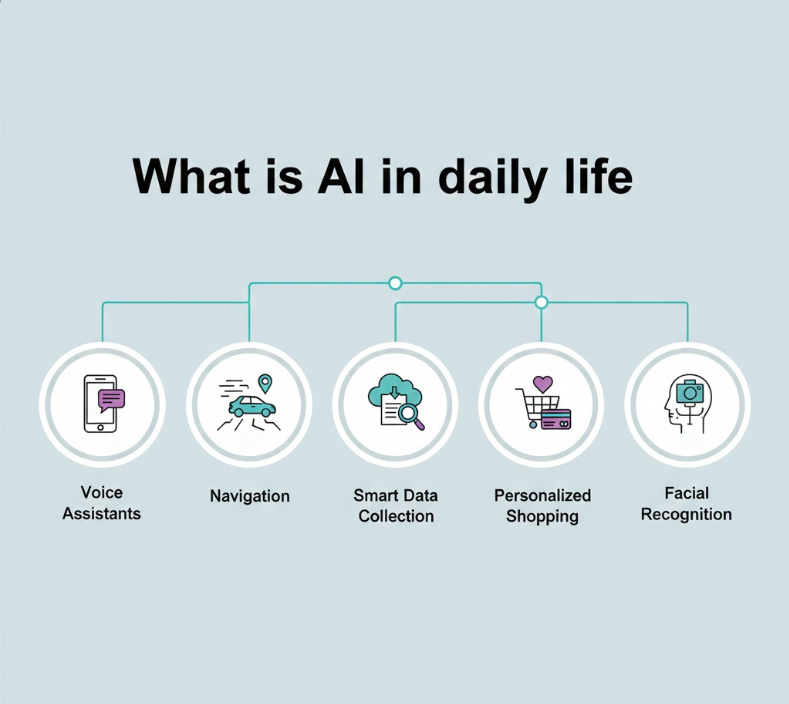
If you are wondering what is AI used for, here are some common examples:
- Google Maps for traffic prediction
- YouTube and Netflix recommendations
- Voice assistants like Alexa, Siri, and Google Assistant
- Email spam filters
- Online shopping suggestions
- Chatbots on websites
AI helps make our daily tasks faster and easier.
Benefits of AI
Artificial Intelligence offers many advantages:
- Works 24/7 without breaks
- Reduces human errors
- Saves time and cost
- Improves customer service
- Helps doctors detect diseases early
- Increases business productivity
AI is helping industries like healthcare, education, banking, and agriculture grow faster.
Challenges of AI
Even though AI is powerful, it also has some challenges.
- Job changes due to automation
- Data privacy concerns
- High development cost
- Risk of biased decisions if data is incorrect
Organizations like
OpenAI
are working to make AI safe and responsible.
Future of AI
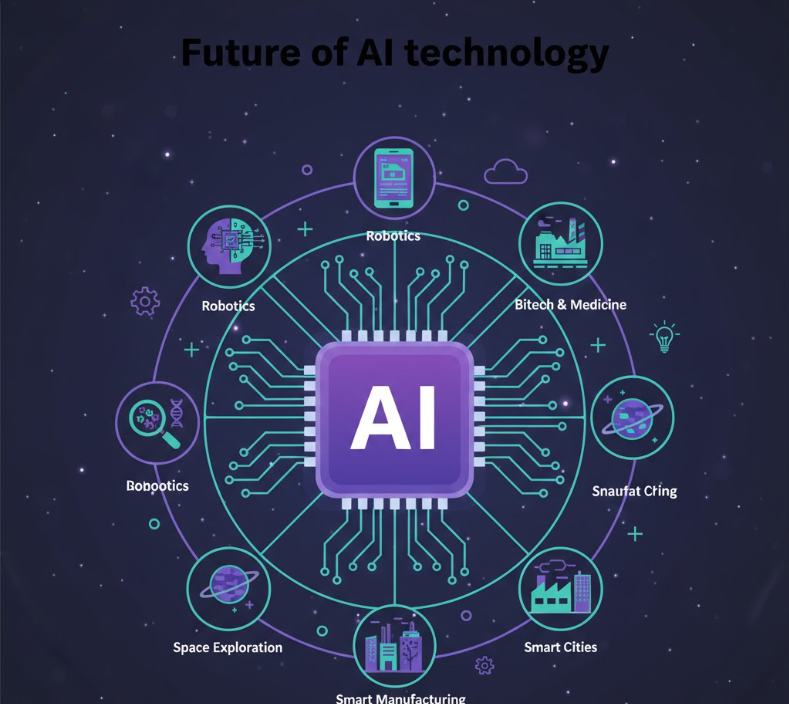
The future of AI is very bright. In the coming years, AI will help in:
- Self-driving cars
- Smart homes and smart cities
- Personalized healthcare
- Better education systems
- Climate and energy management
Experts believe AI will create many new job opportunities and transform industries.
Real-World Applications of AI
Artificial Intelligence is used in many industries to make work faster, smarter, and more efficient.
- Healthcare: AI helps doctors detect diseases early by analyzing medical reports, images, and patient data. It also supports better treatment planning.
- Retail: AI recommends products based on customer interests and helps stores manage stock and predict demand.
- Customer Service: AI chatbots answer customer questions anytime (24/7) and send complex issues to human agents.
- Manufacturing: AI predicts machine problems before they happen, improves production, and reduces waste.
- Finance: AI detects fraud, analyzes financial data, manages risks, and helps people make better investment decisions.
In simple words, AI helps different industries save time, reduce errors, and improve decision-making.
How to Start Learning AI
If you want to learn what is AI practically, you can start with these resources:
- Try
ChatGPT - Learn coding from
freeCodeCamp - Practice small AI or Machine Learning projects
Internal Link:
Read more: Top AI Tools for Beginners
Conclusion
What is AI? It is a powerful technology that helps machines think, learn, and make decisions like humans. Today, AI is already part of our daily life, and its importance will continue to grow in the future.
Understanding what is AI helps students, professionals, and businesses stay updated with modern technology. Learning AI today can open many career opportunities and prepare you for the future.

- How to Create a Server on AWS – Step-by-Step Guide for Beginners - September 2, 2026
- Helm GitOps Integration: A Complete Step-by-Step Guide for Beginners - August 6, 2026
- DevOps Engineer vs Platform Engineer vs Site Reliability Engineer (SRE) - August 4, 2026