
Introduction
With the rapid growth of cloud computing, Kubernetes, AI, and automation, organizations have started creating specialized engineering roles. Three of the most popular roles are:
- DevOps Engineer
- Platform Engineer
- Site Reliability Engineer (SRE)
Although these roles work closely together, their responsibilities, goals, and day-to-day activities are quite different.
If you’re planning a career in DevOps or Cloud Engineering, understanding these differences will help you choose the right learning path.
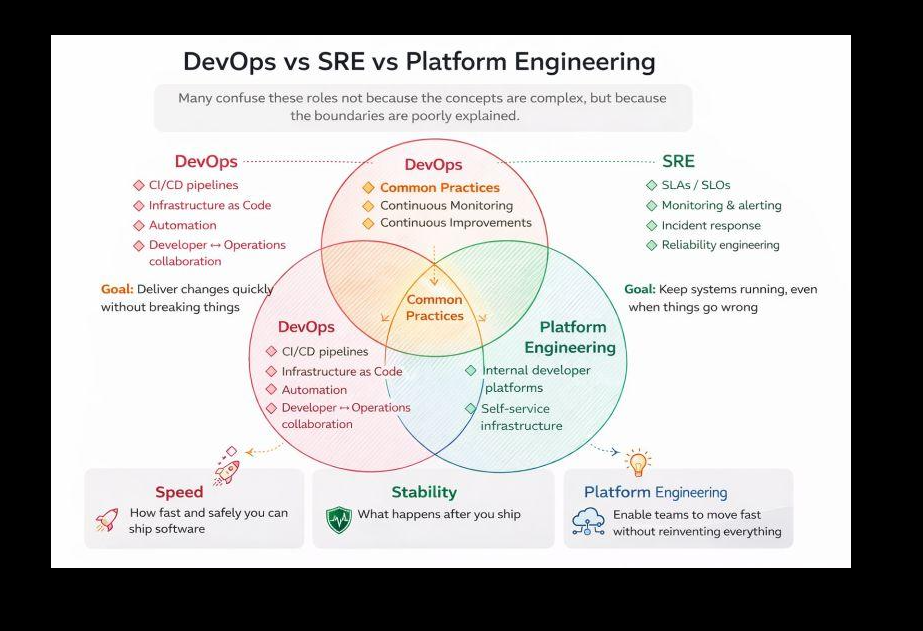
What is DevOps Engineering?
Definition
DevOps Engineering is the practice of combining software development and IT operations to deliver software faster, more reliably, and with fewer errors.
Its primary goal is to automate everything from development to deployment.
Main Objectives
- Continuous Integration
- Continuous Delivery
- Infrastructure Automation
- Faster Releases
- Collaboration between Developers and Operations
- Monitoring Applications
Responsibilities
- Build CI/CD Pipelines
- Infrastructure as Code
- Docker Containerization
- Kubernetes Deployment
- Cloud Infrastructure
- Monitoring Setup
- Automation Scripts
- Security Integration
Popular Tools
| Category | Tools |
|---|---|
| CI/CD | Jenkins, GitHub Actions, GitLab CI |
| Containers | Docker |
| Orchestration | Kubernetes |
| IaC | Terraform |
| Configuration | Ansible |
| Monitoring | Prometheus, Grafana |
| Version Control | Git |
What is Platform Engineering?
Definition
Platform Engineering focuses on building an Internal Developer Platform (IDP) that enables developers to deploy, test, and manage applications through self-service workflows without worrying about the underlying infrastructure.
Think of Platform Engineers as the team that builds the tools DevOps teams and developers use every day.
Main Goals
- Self-Service Infrastructure
- Standardized Deployments
- Developer Productivity
- Security by Default
- Infrastructure Reusability
- Golden Paths
Responsibilities
- Build Internal Developer Platforms
- Create reusable Infrastructure Templates
- Build Kubernetes Platforms
- Standardize CI/CD
- Implement Policy as Code
- Build Self-Service Portals
- Improve Developer Experience
All other information refer the blogs https://devopslover.com/what-is-platform-engineering-a-beginners-guide/
What is Site Reliability Engineering (SRE)?
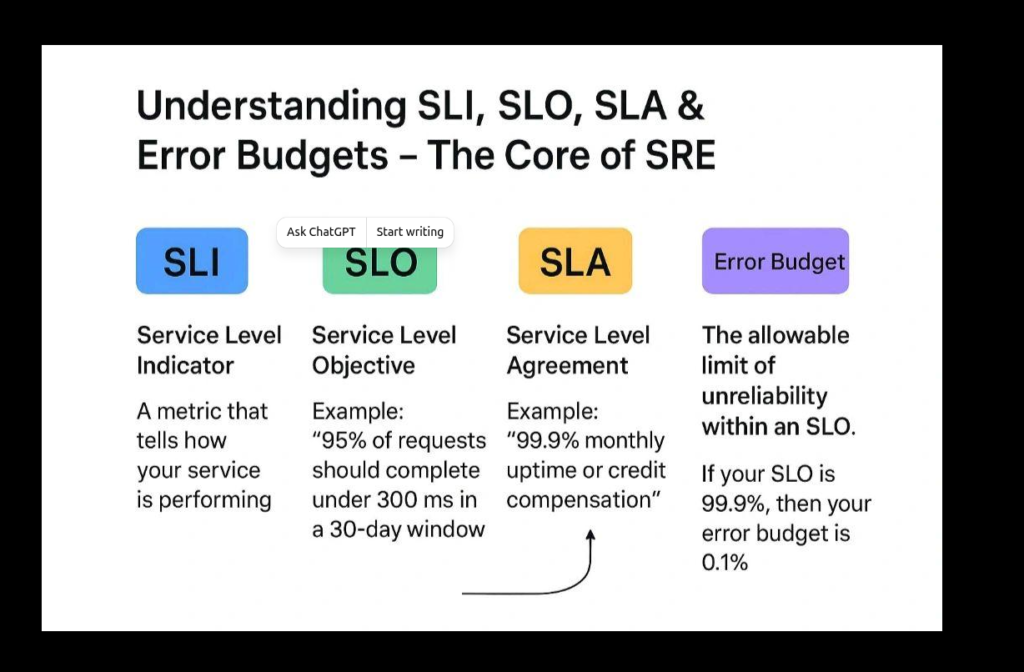
Definition
Site Reliability Engineering (SRE) is a discipline created by Google that applies software engineering principles to IT operations to improve system reliability, scalability, and availability.
The main objective is to keep production systems highly available while minimizing downtime.
Main Goals
- High Availability
- Reliability
- Incident Management
- Error Budget Management
- Monitoring
- Performance Optimization
- Capacity Planning
Responsibilities
- Monitor Production Systems
- Incident Response
- Root Cause Analysis (RCA)
- Create SLOs & SLIs
- Capacity Planning
- Automation
- Reliability Improvements
Popular Tools
- Prometheus
- Grafana
- Datadog
- New Relic
- PagerDuty
- Loki
- Jaeger
- OpenTelemetry
- ELK Stack
All other information refer the blogs https://devopslover.com/what-is-site-reliability-engineering-sre-complete-guide/
Why Do These Three Roles Exist?
Modern software systems are complex.
Instead of one engineer doing everything:
- DevOps Engineers automate software delivery.
- Platform Engineers build reusable platforms.
- SREs ensure production systems remain reliable.
Together, they improve speed, scalability, reliability, and developer productivity.
DevOps vs Platform Engineering vs SRE Comparison
| Feature | DevOps Engineer | Platform Engineer | SRE |
|---|---|---|---|
| Primary Goal | Faster Delivery | Better Developer Experience | Reliability |
| Focus | CI/CD | Internal Platforms | Production Systems |
| End Users | Developers & Operations | Developers | Customers |
| Infrastructure | Creates | Standardizes | Maintains |
| Automation | High | Very High | High |
| Monitoring | Yes | Platform Monitoring | Extensive Monitoring |
| Kubernetes | Deploy Applications | Build Platform | Maintain Cluster Health |
| Incident Handling | Limited | Platform Issues | Primary Responsibility |
| Availability | Medium | High | Critical |
| Developer Experience | Medium | Very High | Medium |
Workflow Comparison
Developer
     │
     ▼
Platform Engineer
(Builds Internal Platform)
     │
     ▼
DevOps Engineer
(Builds CI/CD Automation)
     │
     ▼
Application Deployment
     │
     ▼
SRE
(Monitors Production)
Day-to-Day Activities
DevOps Engineer
- Create Jenkins Pipelines
- Write Terraform Code
- Configure Docker
- Deploy Kubernetes Applications
- Manage Cloud Infrastructure
- Automate Tasks
Platform Engineer
- Create Internal Platforms
- Build Self-Service Portals
- Standardize Kubernetes
- Create Helm Templates
- Improve Developer Experience
SRE
- Monitor Production
- Handle Incidents
- Analyze Logs
- Create Alerts
- Capacity Planning
- Reduce Downtime
Tool Comparison
| Category | DevOps | Platform | SRE |
|---|---|---|---|
| Git | ✅ | ✅ | ✅ |
| Jenkins | ✅ | ✅ | ❌ |
| GitHub Actions | ✅ | ✅ | ❌ |
| Docker | ✅ | ✅ | ✅ |
| Kubernetes | ✅ | ✅ | ✅ |
| Terraform | ✅ | ✅ | Limited |
| Helm | ✅ | ✅ | Limited |
| Prometheus | ✅ | ✅ | ✅ |
| Grafana | ✅ | ✅ | ✅ |
| ArgoCD | ✅ | ✅ | Limited |
| Vault | ✅ | ✅ | Limited |
| Backstage | ❌ | ✅ | ❌ |
| PagerDuty | ❌ | ❌ | ✅ |
| Datadog | Limited | Limited | ✅ |
Skills Comparison
| Skill | DevOps | Platform | SRE |
|---|---|---|---|
| Linux | ⭐⭐⭐⭐⭐ | ⭐⭐⭐⭐ | ⭐⭐⭐⭐⭐ |
| Git | ⭐⭐⭐⭐⭐ | ⭐⭐⭐⭐ | ⭐⭐⭐ |
| Docker | ⭐⭐⭐⭐⭐ | ⭐⭐⭐⭐ | ⭐⭐⭐ |
| Kubernetes | ⭐⭐⭐⭐⭐ | ⭐⭐⭐⭐⭐ | ⭐⭐⭐⭐ |
| Terraform | ⭐⭐⭐⭐⭐ | ⭐⭐⭐⭐⭐ | ⭐⭐⭐ |
| CI/CD | ⭐⭐⭐⭐⭐ | ⭐⭐⭐⭐ | ⭐⭐ |
| Programming | ⭐⭐⭐ | ⭐⭐⭐⭐ | ⭐⭐⭐⭐⭐ |
| Monitoring | ⭐⭐⭐ | ⭐⭐⭐⭐ | ⭐⭐⭐⭐⭐ |
| Networking | ⭐⭐⭐⭐ | ⭐⭐⭐⭐ | ⭐⭐⭐⭐⭐ |
Career Roadmap
Linux
      │
Networking
      │
Git
      │
Docker
      │
Kubernetes
      │
Cloud (AWS/Azure/GCP)
      │
Terraform
      │
CI/CD
      │
Choose Career
      │
 ┌───────────────┬───────────────┬──────────────┐
 │               │               │
DevOps     Platform Eng.      SRE
Advantages
DevOps
- Faster software delivery
- Strong automation skills
- High demand
- Excellent cloud opportunities
Platform Engineering
- Better developer productivity
- Highly scalable infrastructure
- Reusable platforms
- Future-focused role
SRE
- High-paying specialization
- Deep production knowledge
- Reliability expertise
- Strong problem-solving skills
Disadvantages
DevOps
- Broad skill set required
- Frequent tool updates
- Can involve operational support
Platform Engineering
- Higher complexity
- Requires deep Kubernetes knowledge
- Platform design responsibility
SRE
- On-call rotations
- High-pressure incident handling
- Requires strong programming and systems expertise
Conclusion
- DevOps Engineering focuses on automating software delivery, enabling faster, consistent, and reliable application releases through CI/CD, Infrastructure as Code, containers, and cloud automation.
- Platform Engineering builds internal developer platforms that simplify infrastructure management, provide self-service capabilities, and improve developer productivity with standardized tools and workflows.
- Site Reliability Engineering (SRE) focuses on keeping production systems reliable, scalable, and highly available through monitoring, observability, automation, incident response, and performance optimization.
- These roles are complementary rather than competing. Platform Engineers create the foundation, DevOps Engineers automate application delivery on that foundation, and SREs ensure the applications remain healthy and reliable in production.
- Learning Linux, Git, Docker, Kubernetes, Cloud platforms, Terraform, CI/CD, and Observability provides a strong base for any of these career paths.
- As organizations continue adopting cloud-native technologies and Kubernetes, demand for all three roles is expected to remain strong, making them excellent long-term career choices.
- For beginners, DevOps Engineering is often the best starting point. With experience, professionals can specialize in Platform Engineering or SRE based on their interests in developer platforms or production reliability.

- How to Create a Server on AWS – Step-by-Step Guide for Beginners - September 2, 2026
- Helm GitOps Integration: A Complete Step-by-Step Guide for Beginners - August 6, 2026
- DevOps Engineer vs Platform Engineer vs Site Reliability Engineer (SRE) - August 4, 2026